
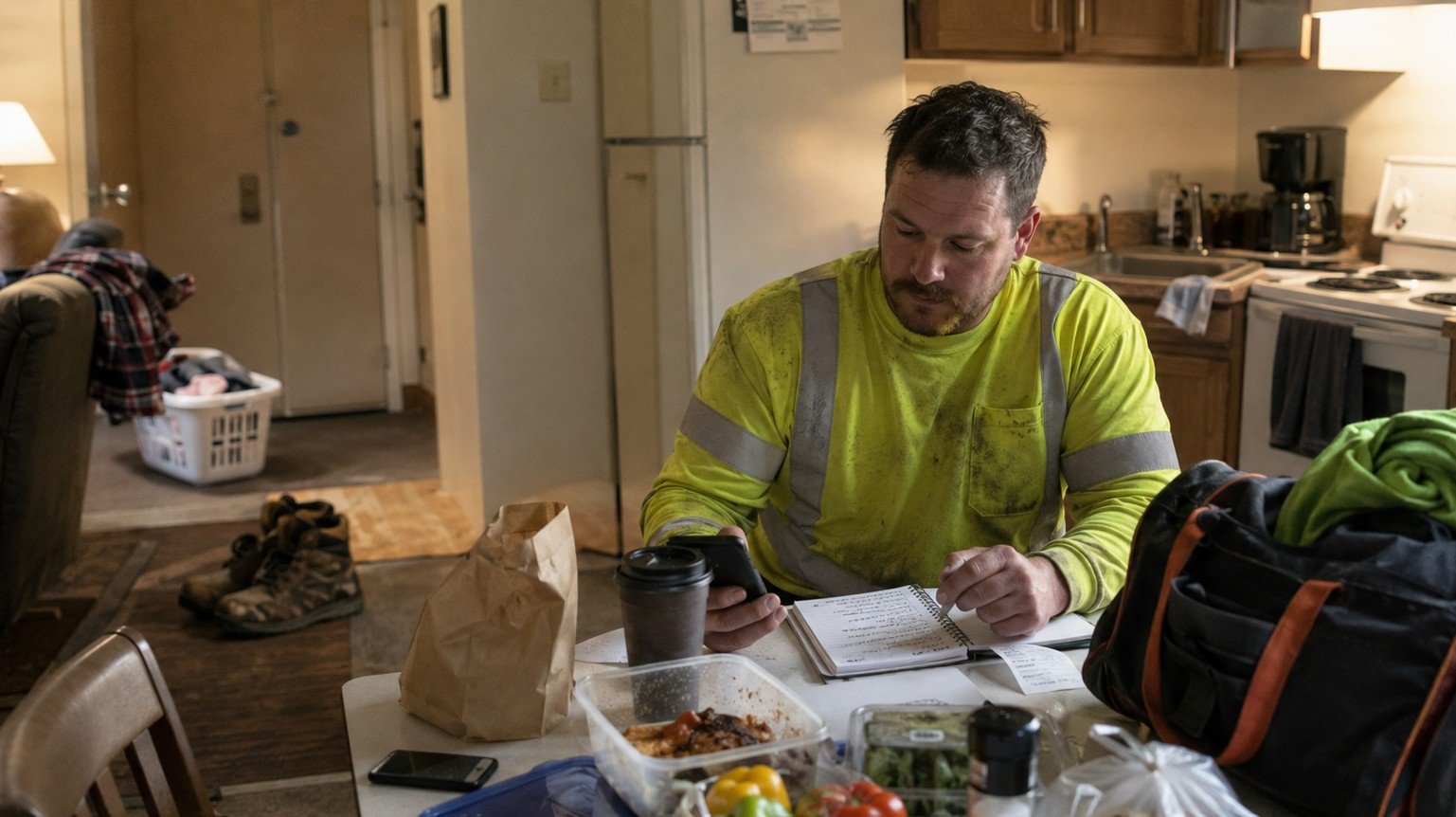
If you're working a turnaround, a pipeline job, or any assignment that takes you away from home for weeks or months, you already know the drill: your per diem is supposed to cover housing and meals while you're on the road. What a lot of workers don't realize is just how much of that money gets eaten up by a standard hotel room — and how much further it can stretch in a furnished rental instead.
That said, not all hotels are created equal here. A growing number of extended-stay and suite-style properties are built more like apartments than traditional hotel rooms — full kitchens, separate living space, laundry on site — and they belong in this same conversation right alongside furnished houses and RV spots. The real dividing line isn't "hotel vs. rental," it's whether the place you're staying actually has a kitchen and is priced for a multi-week stay, or whether it's a standard room built for a one or two night visit.
What Per Diem Actually Covers
Per diem is a daily allowance your employer pays to cover the cost of being away from home — typically split between lodging and meals/incidentals (M&IE). The exact amount varies by employer, location, and sometimes union agreement, but the idea is the same everywhere: it's meant to cover your actual cost of living on the road, not to be a source of extra income or an extra expense you eat out of pocket.
The catch is that per diem is usually a flat daily rate. Whatever you don't spend, you keep. Whatever you overspend, comes out of your own pocket. That single fact is why housing choice matters so much.
Where a Standard Hotel Room Quietly Eats Into Your Per Diem
A standard hotel room in the U.S. now runs around $150–$250 a night on average, and that's before taxes, resort fees, and parking charges that often aren't included in the advertised rate. Even a basic extended-stay room without a full kitchen can run $300–$800 a week, and a full month can land anywhere from $1,200 to $3,000 depending on the market and brand.
That's just the room. Add in the cost of eating out for every single meal, because a standard hotel room doesn't have a real kitchen, and your per diem can disappear fast — sometimes faster than your employer intended it to.
Where Furnished Rentals Stretch It Further
Furnished houses, rooms, and RV spots built for traveling workers are usually priced by the week or month, and most include utilities and Wi-Fi in that rate — no surprise fees layered on top. The bigger difference, though, is the kitchen. A full kitchen means you're not stuck buying every meal out, which is often where the real savings show up over a multi-week or multi-month stay.
Weekly rates on furnished properties built for this exact situation often run well below what a comparable hotel stay costs for the same length of time — and because you're renting directly from the landlord, there's no booking fee or middleman markup added on top.
What to Look For in a Furnished Rental
If you're trying to make your per diem go further, a few things are worth checking before you book:
- Utilities and Wi-Fi included — confirm this upfront so there's no surprise bill later
- A real kitchen — even a small one saves real money over weeks of eating out
- Laundry access — in-unit or on-site, so you're not hunting for a laundromat
- Distance to the job site — closer means less time and gas spent commuting
- Weekly or monthly pricing — almost always cheaper per night than a nightly hotel rate
Finding a Place Without the Hassle
This is exactly the gap BlueCollarHousing.com was built to fill. It's a directory of furnished rentals, private rooms, RV spots, RV parks, furnished apartments, and apartment-style extended-stay hotels — built specifically for people working away from home, including industrial trades, travel nurses, and other traveling professionals.
Searching is free, no account required. When you find a place that fits, you contact the landlord directly — no booking fees, no middleman, no markup eating into the per diem you worked for.
Check current listings at BlueCollarHousing.com.